
Hypermobility in Practice: Screening & Managing Co-Occurring Conditions
Screening, interpreting, and responding to the multi-system presentations that impact rehabilitation
Hypermobility is rarely just about joints.
Co-occurring conditions often drive symptoms, limit progress, and complicate rehabilitation.
This course is designed to help you recognise and respond to these patterns in a practical, clinically relevant way.
Hypermobility in Practice: Screening & Managing Co-Occurring Conditions
Screening, interpreting, and responding to the multi-system presentations that impact rehabilitation
Hypermobility is rarely just about joints.
Co-occurring conditions often drive symptoms, limit progress, and complicate rehabilitation.
This course is designed to help you recognise and respond to these patterns in a practical, clinically relevant way.
It's these co-occurring issues that often make management difficult and put major roadblocks in the way on the path to rehabilitation
Clinicians often feel like they can identify hypermobility, but may lack a deeper understanding of how an individual’s life is affected.
Patients don’t progress as expected. Symptoms fluctuate. Standard approaches don’t always work.
Without understanding the broader clinical picture, it becomes difficult to communicate effectively and make consistent clinical decisions.
What this course will help you do
Screen for co-occurring conditions
Understand multi-system presentations and they affect a person's experience of pain and disability
Recognise common patterns of presentation in hypermobility patients
Understand what may be limiting progress
Modify exercise and management approaches
Communicate more effectively with patients and the multidisciplinary team

The course structure
This course is currently in development and is planned to include modules covering key areas such as:
Pain, instability and patterns of symptom presentation
POTS, fatigue and exercise tolerance
MCAS, gut and pelvic health
Neurological presentations and craniocervical instability (CCI)
Each module will include screening tools, clinical reasoning, and practical management strategies.
WHY THIS COURSE MATTERS IN CLINICAL PRACTICE
Working with hypermobile patients can be challenging when progress doesn't follow expected patterns.
This is often due to factors that haven't yet been identified or addressed.
This course will help clinicians:
Make more confident clinical decisions
Understand what may be limiting progress
Adjust management more effectively
Set realistic timelines and expectations
Support more consistent, sustainable outcomes
Establish clearer communication with patients and the multidisciplinary team
It's these co-occurring issues that often make management difficult and put major roadblocks in the way on the path to rehabilitation
Clinicians often feel like they can identify hypermobility, but may lack a deeper understanding of how an individual’s life is affected.
Patients don’t progress as expected. Symptoms fluctuate. Standard approaches don’t always work.
Without understanding the broader clinical picture, it becomes difficult to communicate effectively and make consistent clinical decisions.
What this course will help you do
Screen for co-occurring conditions
Understand multi-system presentations and they affect a person's experience of pain and disability
Recognise common patterns of presentation in hypermobility patients
Understand what may be limiting progress
Modify exercise and management approaches
Communicate more effectively with patients and the multidisciplinary team
The course structure
This course is currently in development and is expected to include modules covering key areas such as:
Pain, instability and patterns of symptom presentation
POTS, fatigue and exercise tolerance
MCAS, gut and pelvic health
Neurological presentations and craniocervical instability (CCI)
Each module will include screening tools, clinical reasoning, and practical management strategies.
WHY THIS COURSE MATTERS IN CLINICAL PRACTICE
Working with hypermobile patients can be challenging when progress does not follow expected patterns.
This is often due to factors that have not yet been identified or addressed.
This course will help clinicians:
Make more confident clinical decisions
Understand what may be limiting progress
Adjust management more effectively
Set realistic timelines and expectations
Support more consistent, sustainable outcomes
Communicate more clearly with patients and the multidisciplinary team
Why Learn with Sharon?
If hypermobility feels like a mystery, Sharon is the key to unlocking it.
Sharon Hennessey is an award-winning leader in the field of hypermobility therapy and an international speaker. With 25+ years of experience as a physiotherapist specialising in
hypermobility disorders, Sharon combines evidence-based knowledge with real-world applications.
Her approach is practical, compassionate, and designed to empower healthcare professionals, carers, and individuals living with hypermobility to better understand, recognise, manage, and support effective care in everyday life and communicate about hypermobility with clarity and confidence.
Why Learn with Sharon?
If hypermobility feels like a mystery, Sharon is the key to unlocking it.
Sharon Hennessey is an award-winning leader in the field of hypermobility therapy and an international speaker. With 25+ years of experience as a physiotherapist specialising in
hypermobility disorders, Sharon combines evidence-based knowledge with real-world applications.
Her approach is practical, compassionate, and designed to empower healthcare professionals, carers, and individuals living with hypermobility to better understand, recognise, manage, and support effective care in everyday life and communicate about hypermobility with clarity and confidence.
The Bigger Picture
Hypermobility care becomes more effective when the broader clinical picture is understood.
This supports better decisions, more realistic expectations, and more sustainable progress.
Join the waitlist to stay updated as the course is developed.
Knowledge builds understanding.
Understanding supports acceptance.
Acceptance allows for effective management.
Coming Soon!
Hypermobility in Practice:
Screening & Managing Co-occurring Conditions
This course is currently in development.
Join the waitlist and we'll be in touch as soon as enrolment opens.
What clinicians are saying about Sharon
Get our free Red Flags Checklist on sign up!
A practical clinical tool to help you identify serious pathology in hypermobile presentations, so you know when to refer on with confidence.

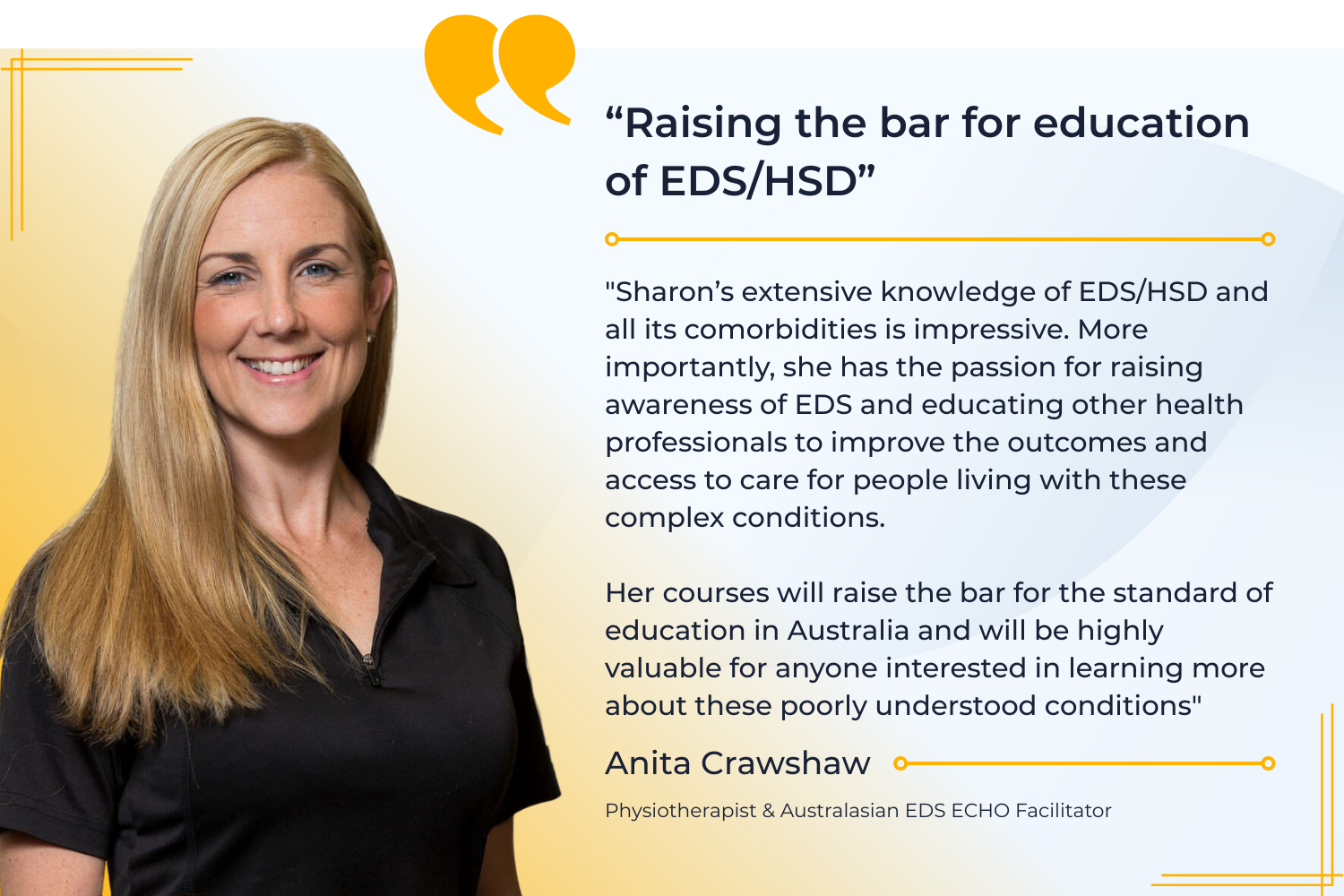
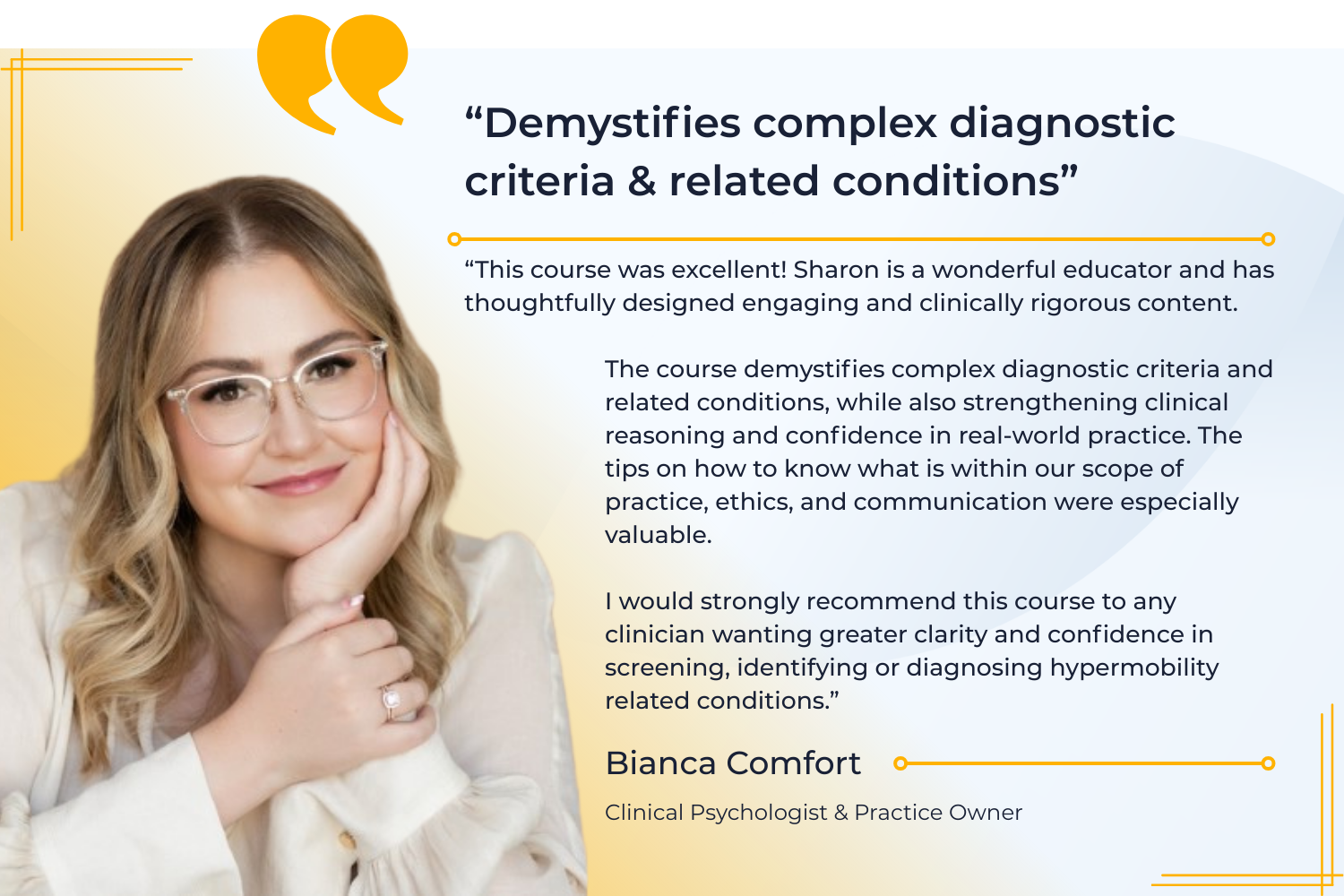
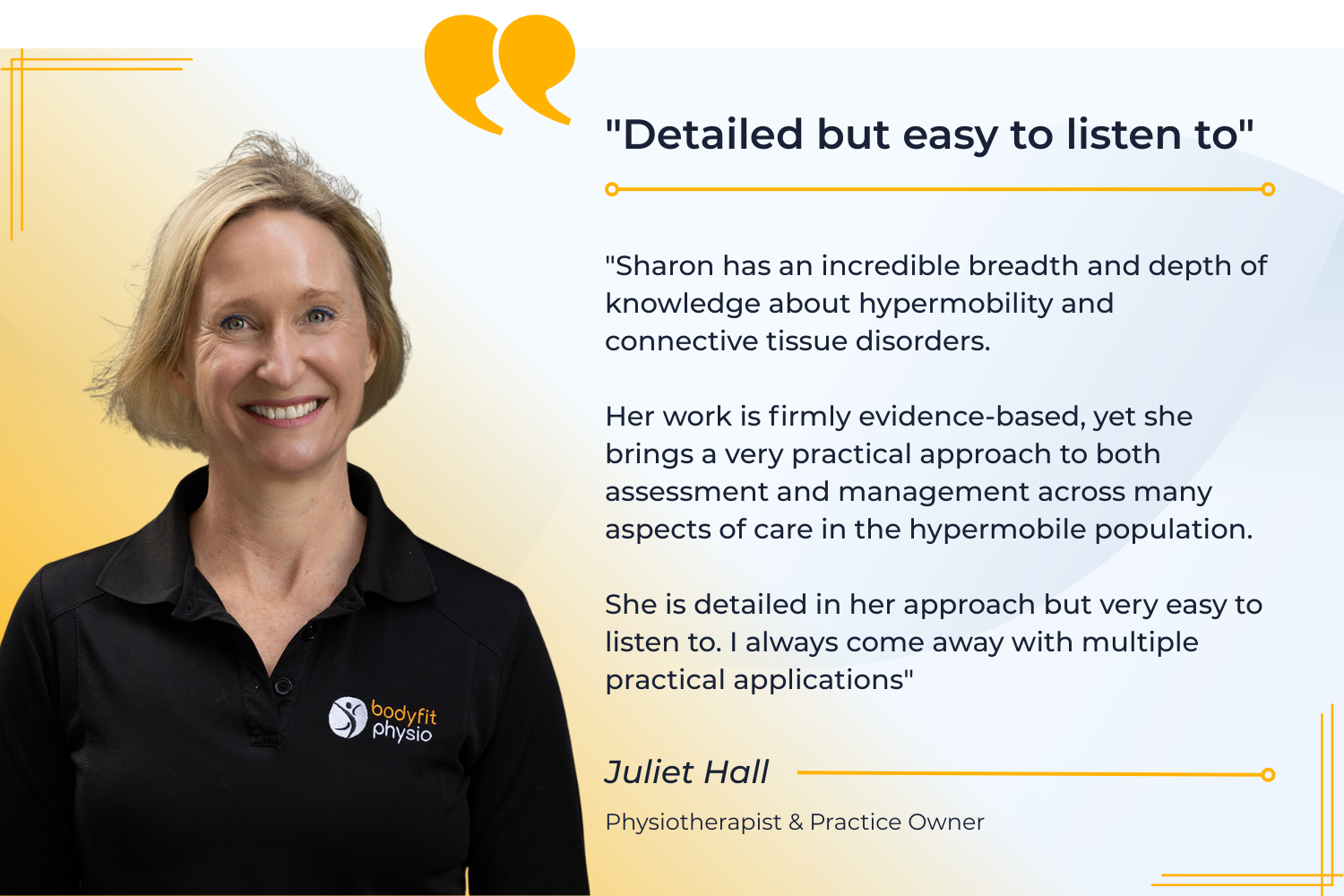
What clinicians are saying about Sharon

Get our free Red Flags Checklist on sign up!
A practical clinical tool to help you identify serious pathology in hypermobile presentations, so you know when to refer on with confidence.
Join The Hypermobility Project
Join the movement to reduce diagnostic delay one client at a time.
You’re not just learning to diagnose
You are taking steps towards better care for your hypermobile clients
Let this be the beginning of your new clinical lens into hypermobility care

Advancing care.
Empowering clinicians.


Disclaimer: The resources on this site are designed for education and general guidance. They are not a replacement for personalised medical advice. If you are seeking care, please consult a qualified medical professional for advice tailored to your situation.
Health professionals trained through this site are responsible for their own clinical decisions and professional conduct.